Richard Comeau, M.Ed. · Education Specialist

Your child needs school to make sense, and it doesn't.

I find what's actually going wrong and build what your child needs so school finally makes sense.

When school does not make sense, your child is left guessing.

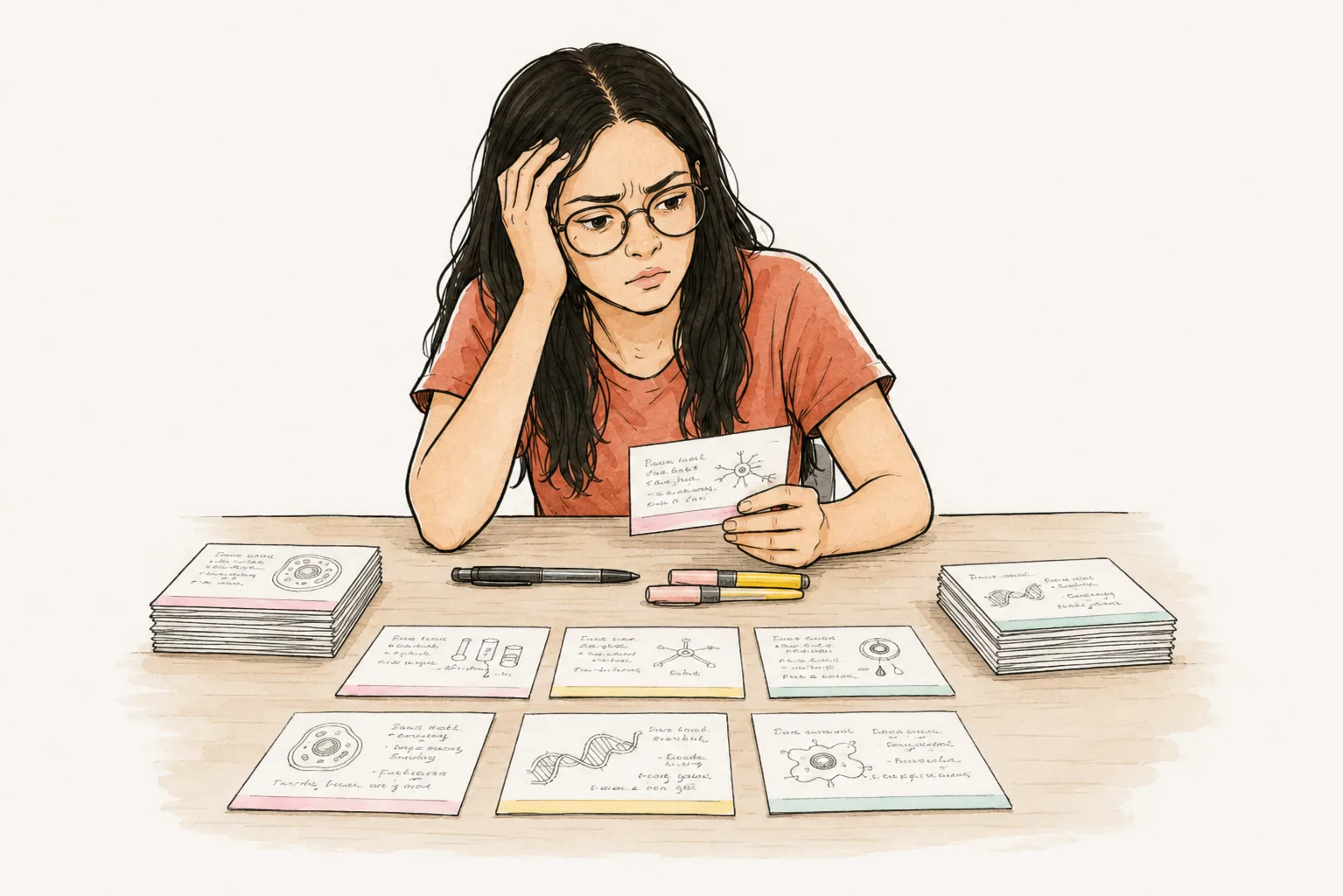
They make hundreds of beautiful flashcards to cram in information they can't tell you anything about. They churn through assignments hoping to hit the word count and incorporate enough quotes, not realizing they are actually being asked to have an opinion and back it up. When they study, it never feels like enough. How can it? When you can't see what anything actually means, there is no finish line.

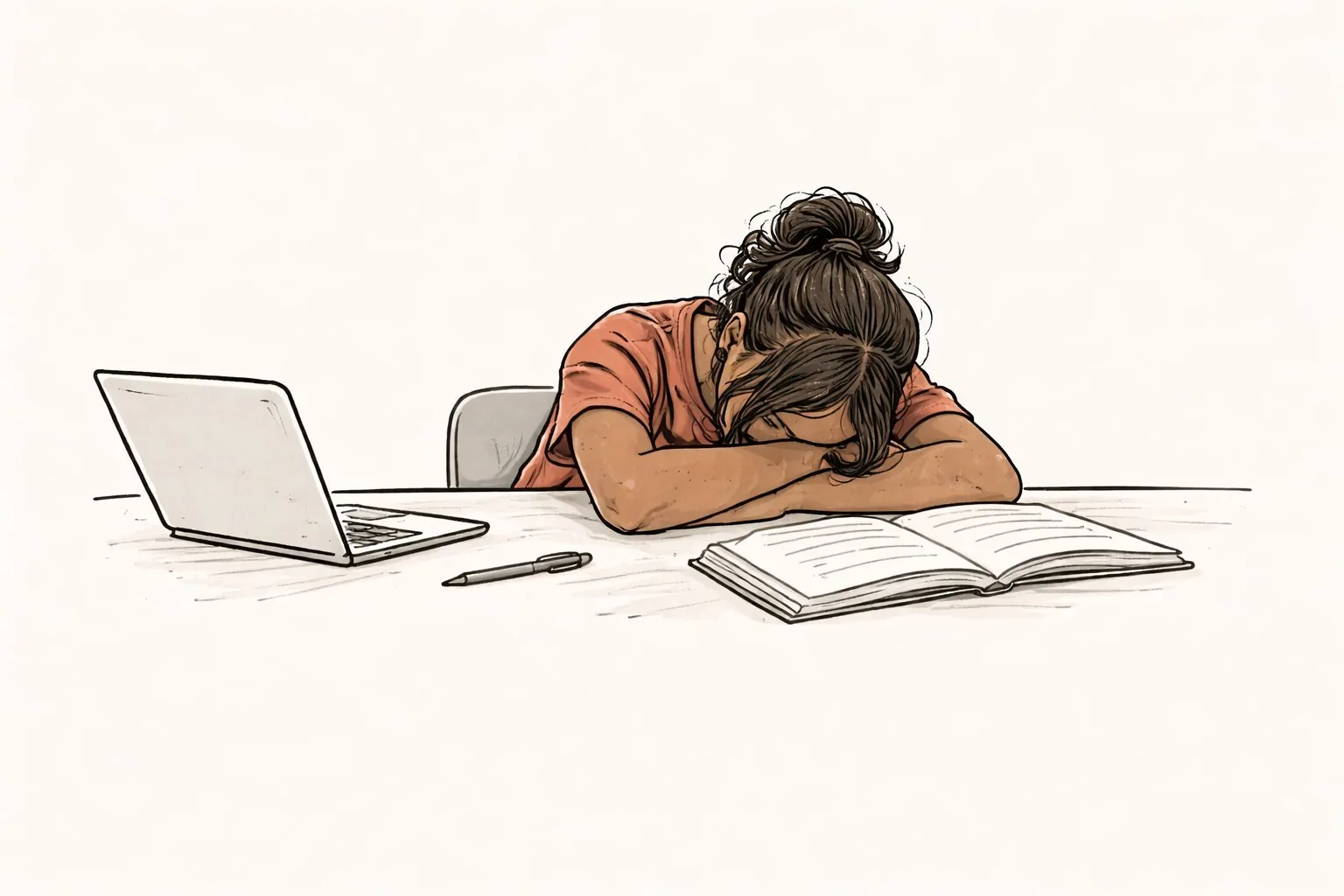
Student exhausted at a desk with schoolwork
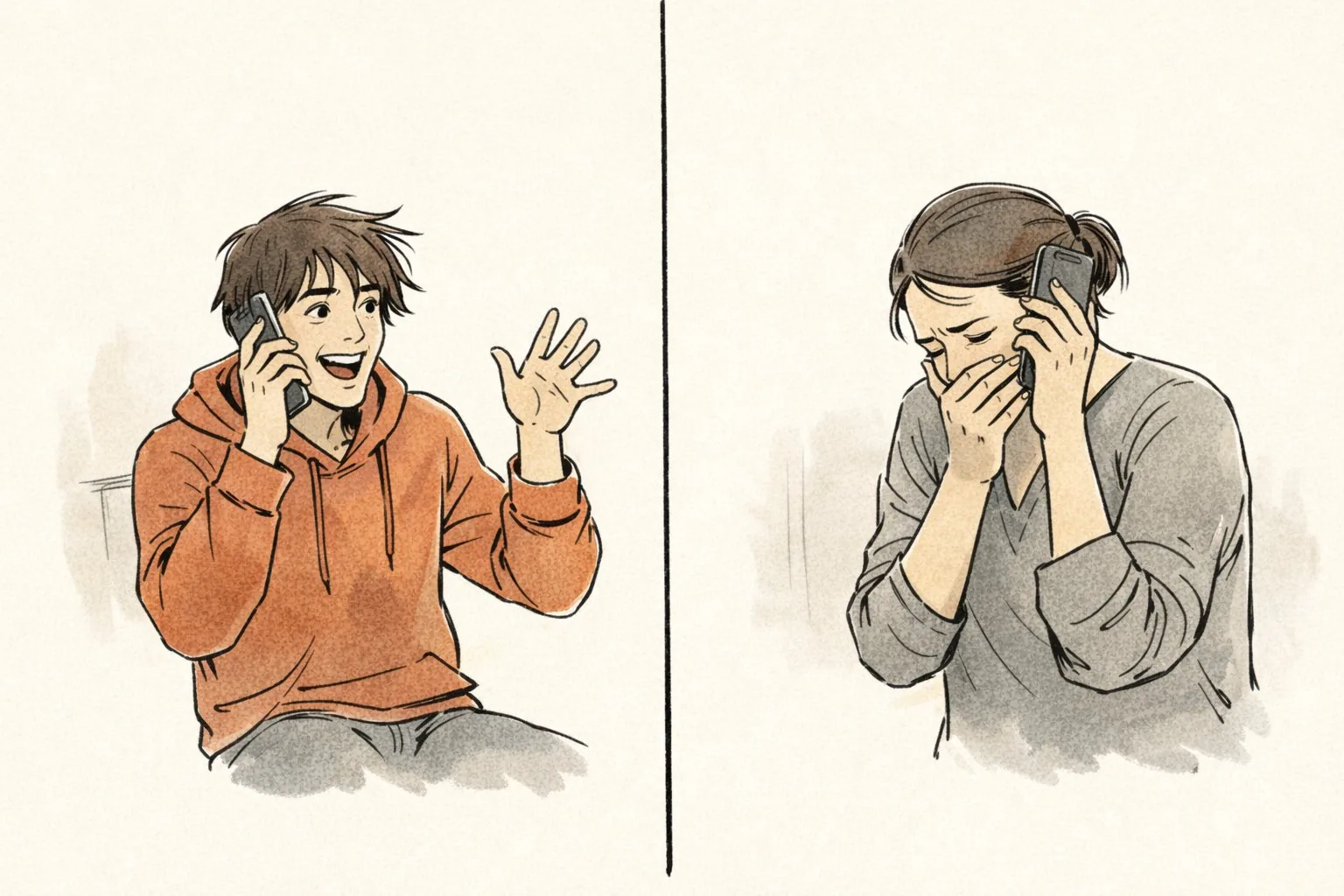
Parent and child speaking by phone

They don't know school can and should make sense.

Your child's habits are understandable. When material makes no sense, it does not get stored in the brain. The only way your child can hold onto it is memorization, which is never what was intended. The teacher or professor has the understanding of what it is for and why it matters, but that context almost never reaches your child. Without that understanding, your child clings to procedures, formulas, word counts, and hours and hours of memorization.

Your child doesn't need fixing. They need the conditions to change.

A person in a wheelchair does not experience immobility when ramps give them access. Your child's challenges don't have the same impact when the material shows up in a form their brain can actually work with.

When that happens, they don't have to fight to learn. They just learn. The struggle was never about capability. It was about what they were being asked to do without the right support.

Student engaged at a laptop

When your child can see the goal,
make sense of the material,
and know they're on track,
the grades take care of themselves.

How I work with your child.

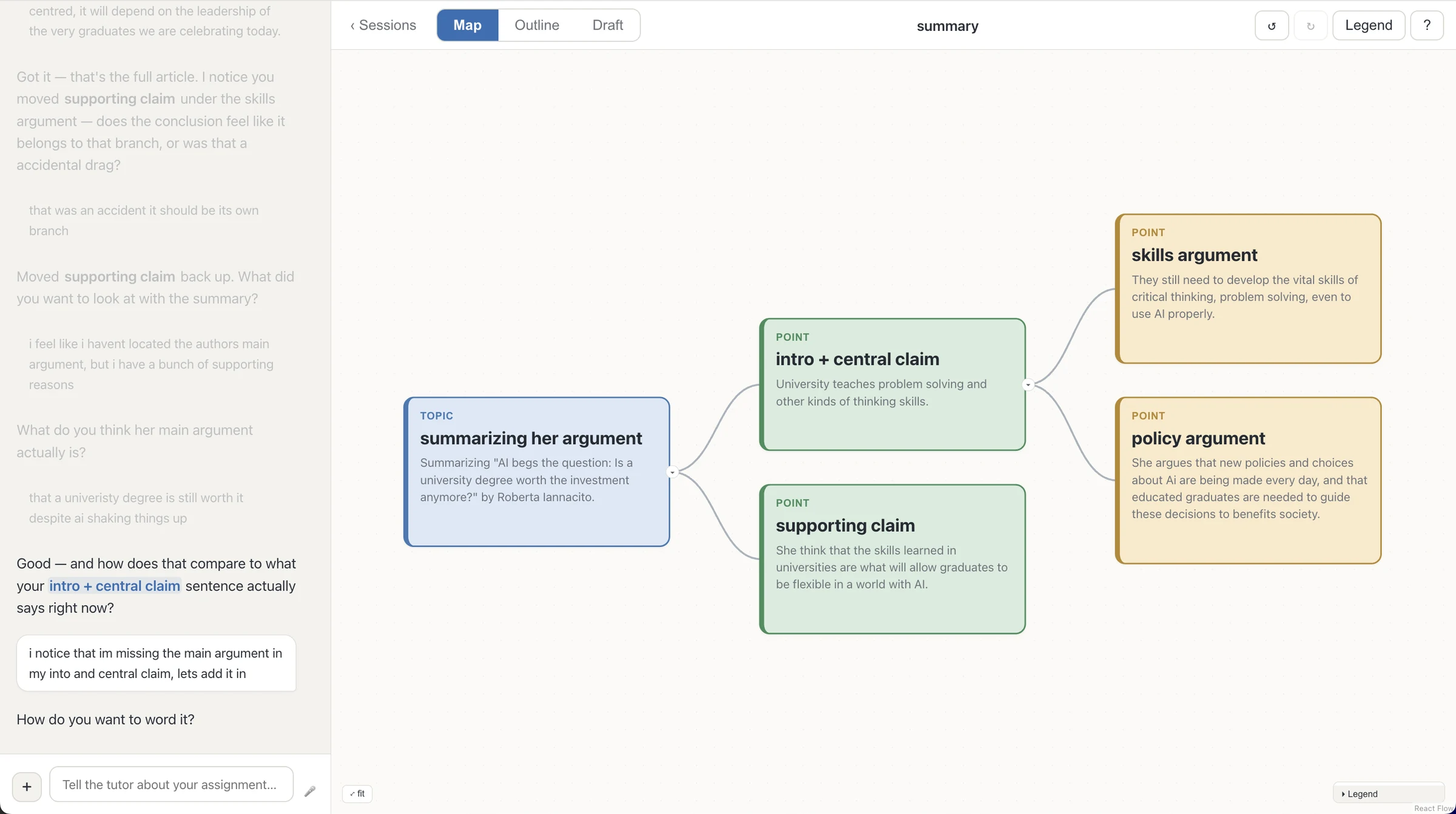
I work with your child in four stages. The goal is to change the conditions around their learning so they can actually do the thinking they are capable of.

01

Understanding what is really happening.

I look closely at how your child is currently engaging with school, where they are getting stuck, and what their results and feedback are actually showing. I help them make sense of their own experience — why the effort isn't translating into results, what is really going wrong, and why school feels the way it does.

02

Defining what learning should actually feel like.

I work with your child to establish what school should feel like when it's working properly. They need to understand what we are working toward: having clarity about what they are trying to understand, actively making sense of the material, knowing what they are supposed to be doing, and being able to tell whether they are on track. That picture becomes the reference point for everything that follows.

03

Building the structure that makes it possible.

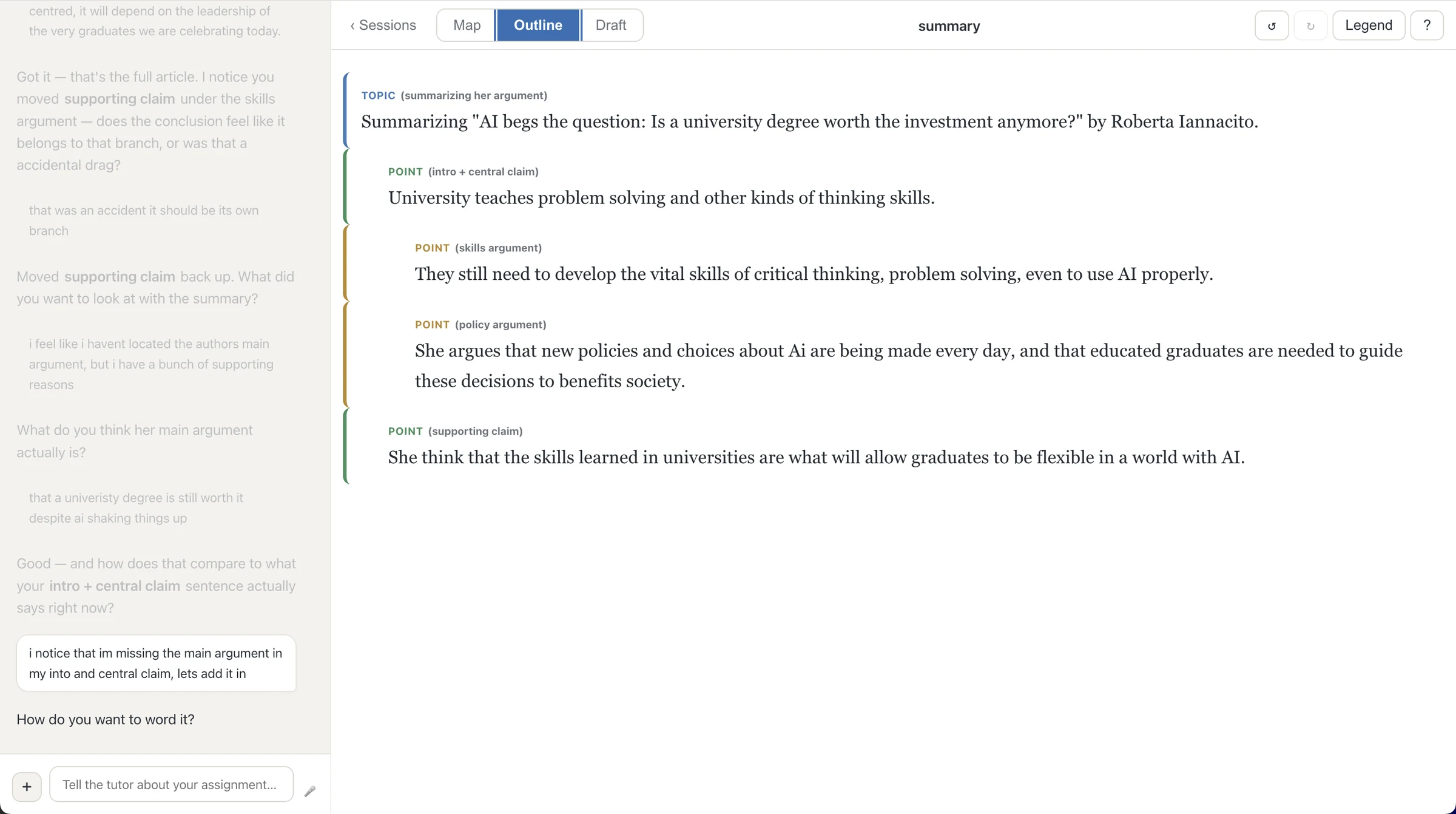
I build custom tools matched to your child's courses and the way their brain works. They handle the parts your child can't carry on their own: organizing the ideas, sequencing the material, showing how concepts connect, and checking whether understanding is actually forming. With that off their plate, your child can do the thinking they were always capable of.

04

Making sure it works and holds.

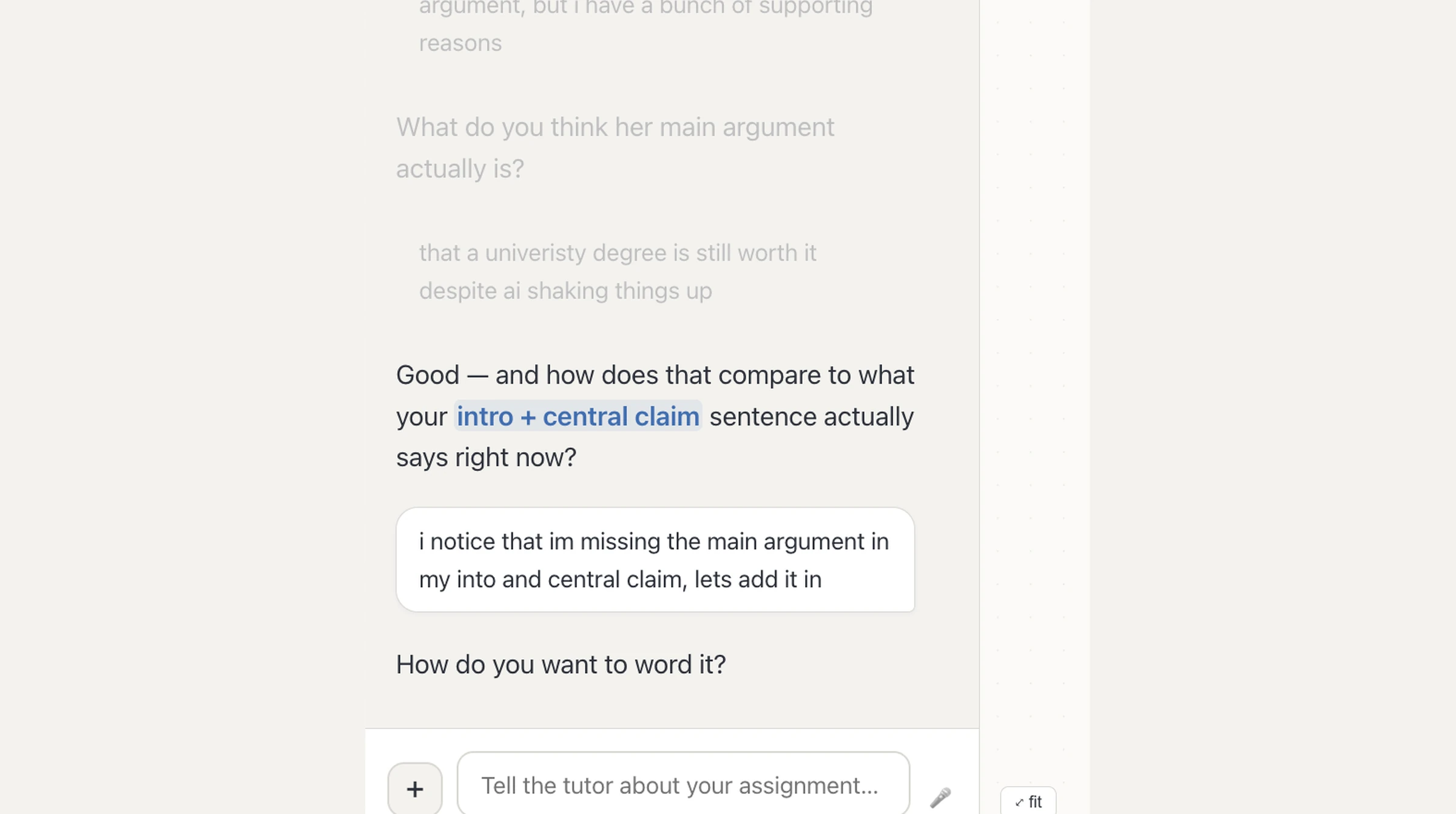
I make sure your child understands how to use what was built and that it is actually producing the clarity and sense-making we established together. I iterate the support based on how they are using it and help them recognize when they are drifting back into grinding instead of using the tools to make sense of the material. The goal is for them to consistently have the experience they should be having in school.

Results.

MatildaBarely passing → high 90s on essays.

Matilda tested at the 99th percentile for reasoning and general intelligence. But her processing speed and working memory were significantly impaired. Her essays were incoherent, and she could not make outlines because she could not hold onto an idea long enough to write it down. When she was provided with a support that allowed her to conversationally develop and document her ideas, her brilliance was finally able to shine through.

Sarah70s → 93%

Her essays circled the same ideas without arriving at analysis. Her course materials had trained her to reproduce rather than think critically, and the analytical expectation was never delivered in a form she could process. When she was provided with a structure that externalized her argument and made the distinction between reconstruction and analysis visible, she went from 70s to 93%.

MarcusChecked out → 80%

Marcus had completely disengaged from school because the material was impenetrable to him as walls of text, and he had resorted to feeding his open book tests to ChatGPT. When the material was rebuilt so that it was tangible and accessible, he was able to make sense of it and engage with it independently, and his grade went to 80%.

NadiaC's → A's

Nadia was a third-year biology student who was grinding through the material and topping out at C's because she was memorizing terms she could not tell you anything about. When the concepts were turned into something her brain could actually take in and her exam prep was matched to how she was actually going to be tested, she was able to understand the material and went from C's to A's.

Priya90% midterm

Priya was at risk of failing advanced stats. She was trying to plug numbers into formulas she did not understand, with no idea which test to apply or why. When she was provided with a system that helped her understand what the variables actually represented and how the formulas connected to the real work, she was able to understand which tests to use and why, and scored 90% on her midterm.

Beyond the grades.

When your child no longer has to fight for every mark, their whole experience of school changes. They learn what real understanding feels like, and once they know that, they stop accepting confusion as normal. Assignments reflect their actual thinking. They walk into exams knowing the material, not hoping they studied the right things. Most importantly, the story your child has been telling themselves about their capability was never true, and they finally get to know that.

From parents and students

"You can articulate what's been going on with my kid better than a therapist. Everything you're saying, I'm just nodding my head up and down."
— D.M.
"Her executive function coach made her feel stupid every single time. With Richard, after each session she would say, 'Oh yeah, Richard and I came up with this thing, and now I know how to do that.' She's advocating for herself now."
— J.K.
"The results have been absolutely remarkable. The improvements in my son's general executive functioning, his approach to school and to his everyday tasks have been life altering."
— R.P.
"If your kid has any learning disability you haven't been able to understand for years, this guy is a magician. He developed a personalized AI tool to help my child learn. It's not ChatGPT. And it's magic."
— A.S.
"It's the one experience I've had where I won't say that we wasted our money because you can actually see the progress really fast. I wish I had known about this in grade five or six."
— L.H.
"School was always a struggle for me, especially transitioning to university. I was trying so hard, but nothing stuck. I've learned how my brain works, built systems that fit me, and now I'm getting straight A's."
— W.S.
1 / 6

Questions parents ask.

Isn't the AI doing the thinking for my child?

No. When AI does the thinking on behalf of your child, through summaries, explanations, and generated answers, it actually replicates the problem. Nothing changes about your child's relationship with the material, nothing makes the task feel more possible or accessible, and your child remains in the same position they were in before. The AI I build does something fundamentally different. It externalizes the organizational and structural load that is preventing your child from making sense of school. Once that is taken off their plate, your child is free to engage in the deep learning that was always beyond their reach.

Won't my child become dependent on it?

The tools make something possible that was not possible before. Some of that scaffolding stays because it should. And some of what your child learns through using it becomes their own. What does not change is that your child can learn and engage with school meaningfully, confidently, and independently.

Isn't this just ChatGPT?

ChatGPT is a general-purpose tool that knows nothing about your child, their courses, their professors' expectations, or the way their brain processes material. Without that awareness, it becomes unstable and unreliable, drifting, hallucinating, performing confidence, and presuming your child understands when they do not. It acts like a cheerleader for partial understanding, pushing your child along without either of them knowing whether real learning is happening. What I build is constructed from working directly with your child, around their specific courses, their specific brain, and their specific breakdown. Every tool knows exactly what your child is supposed to understand and can tell whether they are getting there.

How is this different from tutoring?

This is nothing like tutoring. I do not work with your child to teach them subject-specific material. I provide the structure and stability so your child can engage with the material meaningfully, confidently, and independently. A tutor provides support while they are in the room, and when they leave, the support leaves. What I build stays. Your child can sit down at any time with their actual course material and have the conditions they need to learn and prepare, whether I am in the room or not.

If this is your child, I'd like to hear about what's going on.

A free consultation is the first step. You tell me about your child, and I'll tell you whether I can help.

Tell me about your child

I'll get back to you within 24 hours.